Section 546(E)’s Safe Harbor Protection for Securities-Related Payments Made in Ponzi Schemes: David Kupetz Authors Article in Norton’s 2018 Annual Survey of Bankruptcy Law
In Picard v. Ida Fishman Revocable Trust,...


Nationally Recognized Boutique Bankruptcy, Insolvency and Workout/Restructuring Practice
As a natural extension of the firm’s robust bankruptcy and insolvency practice, SulmeyerKupetz has built an exceptional reputation in handling all aspects of out-of-court workouts and debt and business restructurings. Our attorneys represent a diverse client base, including debtors and other primary obligors; guarantors and other secondary obligors; banks and other secured lenders; creditor committees and unsecured creditors and investors; as well as other parties in out-of-court workouts and restructurings. Our client philosophy is three-fold and simple: (1) maximize value for our clients, (2) reach a mutually acceptable solution, and (3) through our advice and counsel, bring benefit to the process that not only justifies our costs, but justifies our participation and exceeds our clients’ expectations.
The Relationship Between Workout, Restructuring and Bankruptcy
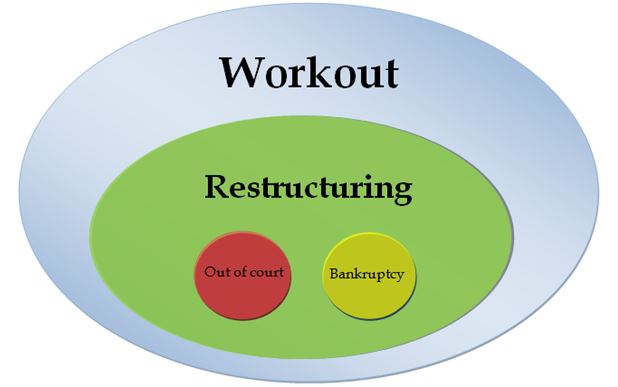
It is important to clarify the major distinctions between a “workout,” a “restructuring” and a “bankruptcy proceeding.” They are not the same, and different skills and abilities may be needed to properly address each situation. In brief, a workout involves solving a problem that a business is facing. Although the business problem can apply to a profitable, successful company, our core practice generally involves assisting clients that are experiencing a significant difficulty, which may arise from one or more of the following:
In its simplest form, a “workout” requires reaching an acceptable solution to one or more specific problems amongst a number of different parties. Sometimes, the solution is reached through negotiating a mutually acceptable agreement amongst the parties involved—an “out-of-court” resolution. Sometimes, the solution can only be reached by seeking the protections afforded under the Bankruptcy Code. In either scenario, the goal of the workout is to solve the problem, whether it involves resolving cash flow issues, capital structure, management and direction or strategic business matters.
A “restructuring” is a type of workout that generally involves a modification of a company’s debt or equity structure. This may occur by way of an “out-of-court” agreement reached among the company, its creditors and equity holders; typically, these types of deals involve intermediaries to assist the parties in reaching a solution that “works” for all parties involved in the process. A restructuring may also occur by seeking the protections afforded under the Bankruptcy Code by means of filing for Chapter 11 bankruptcy relief. In these situations, the parties work through the process established pursuant to the Bankruptcy Code to effect a restructuring—typically, the Chapter 11 filing is necessitated by timing issues or the failure of one or more of the parties to agree to a restructuring transaction. In bankruptcy reorganizations, all the constituencies are brought before the bankruptcy court. This tends to be in stark contrast to an out-of-court restructuring which is often more narrowly focused, in which only a company’s lenders and other major creditors participate.
In comparison, a “bankruptcy” is a process that commences upon the filing of a petition (whether voluntarily by the company, or involuntarily) that seeks to invoke the Bankruptcy Code to achieve a desired result. Sometimes, as noted above, the goal is to effect a restructuring; in other instances, it is to effect a sale or other liquidation. Regardless of the desired result, an advisor’s knowledge of the Bankruptcy Code, and the ability to appear before the bankruptcy judge and properly advise as to the rules and process, is critical to success.
These distinctions are very important for a variety of reasons. What do you do when there are multiple parties involved who are not inclined to reach a consensual arrangement absent meaningful consequences? What do you do when one of the lenders in a restructuring seeks to obtain judicial or legal relief “pending” further negotiations as to the terms of the restructuring deal? When it is truly in a client’s best interests to pursue a bankruptcy or other form of insolvency relief? In each of these instances, knowledge of both “out-of-court” settlements and the bankruptcy process is vital to best advise a client of the proper path to address and resolve the problems that led to the workout in the first place. Our firm is knowledgeable and prepared to address all of these issues.
Committed to Finding Solutions
As discussed above, a workout is needed because a problem has arisen that harms the viability or performance of a business. We are contacted to provide assistance. We typically meet with management and the parties and “do our homework” to objectively assess the situation, identify the problem along with the company’s core competencies, and begin to address how to best fill in the missing pieces and resolve the issues. Our attorneys conduct a thorough evaluation that involves examining documents, understanding the business, consulting with financial advisors, and working with the management team to craft a solution.
In some cases, we are able to solve the problem through negotiating a deal, resolving terms, or securing a forbearance or obtaining a continuation of time to work though issues. Sometimes, securing additional time to allow a company to develop a viable business model or find another exit strategy or strategic partner is a very beneficial solution that will help yield a higher value to the investors and the lenders.
Understanding and Anticipating Client Concerns
“How am I going to get the money to build the opportunity, continue the opportunity, or fix the problem?” We have learned from many years of workout and restructuring experience that some variation of this question is what keeps our clients up at night. Our workout/restructuring attorneys are trained to effectively evaluate and anticipate how a changing marketplace or business environment can impact clients, such as:
Unique Market Position and Specialized Expertise Deliver Important Client Advantages
With respect to workout and restructuring matters, selecting SulmeyerKupetz provides clients with a number of advantages and opportunities, including the following: